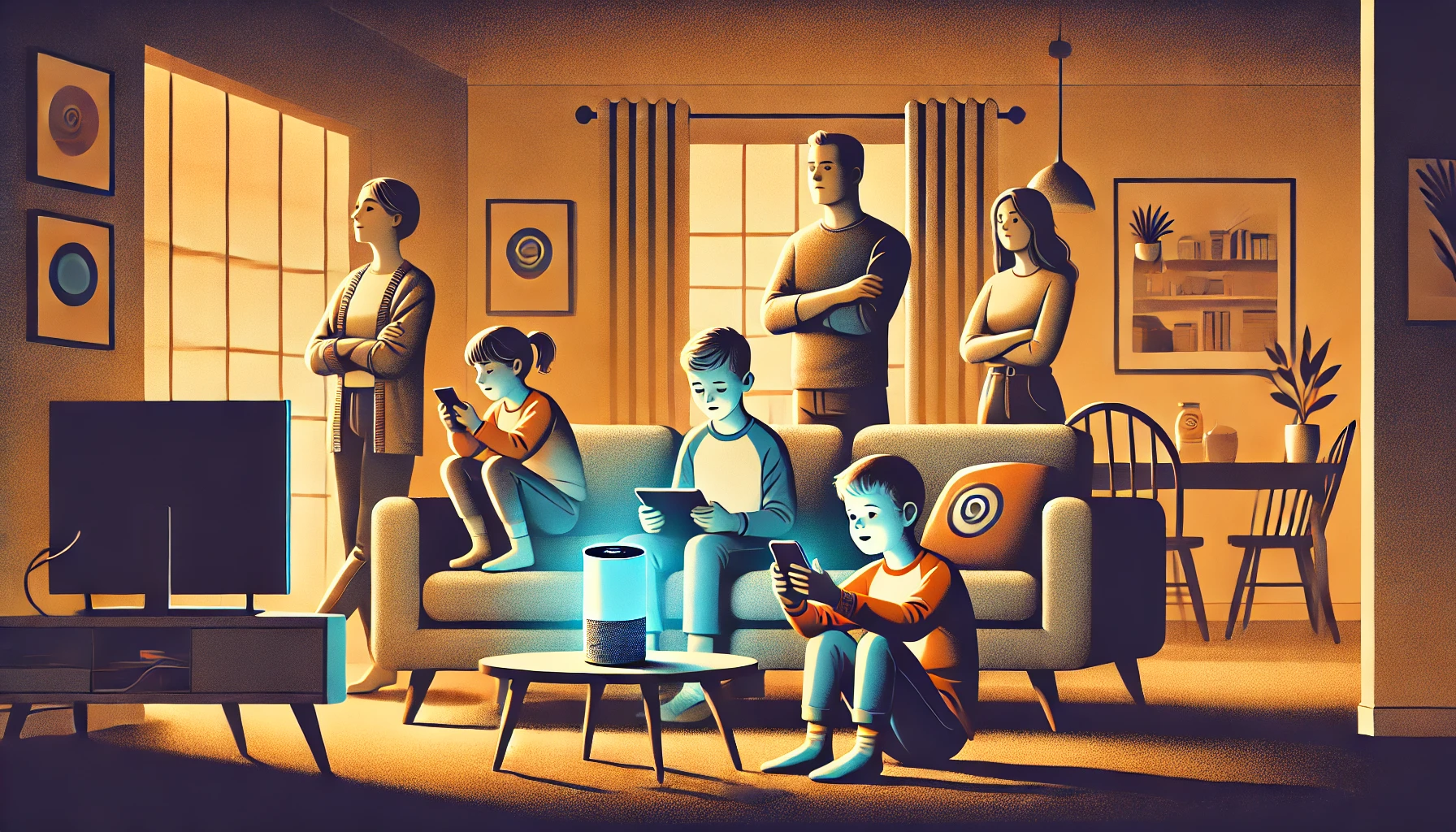
La IA Llegó a Casa (Y Nadie Leyó el Manual de Instrucciones)
Cuando olvidamos que nuestros hijos también necesitan “change management”
En LinkedIn hablamos constantemente sobre adopción de IA en empresas, estrategias de change management, políticas de governance, restricciones de TI. Tenemos comités, workshops, capacitaciones, protocolos.
Pero en casa, nadie está dando ese training.
Y mientras nosotros debatimos en salas de juntas sobre el uso ético de ChatGPT para análisis de datos, nuestros hijos están en su cuarto usando la misma tecnología para hacer trampa en los exámenes. Sin que nadie les haya explicado por qué eso es un problema.
El nuevo miembro de la familia
Hace unos años, Alexa, Siri, Cortana y “Hey Google” se convirtieron en miembros no oficiales de nuestros hogares.
“Alexa, prende la luz.”
“Siri, ¿qué pendientes tengo hoy?”
“Hey Google, pon música de los 80.”
Fue tierno al principio. Videos virales de abuelitas pidiéndole a Alexa que rezara el rosario con ellas. Niños pequeños aprendiendo a decir “por favor” a los asistentes de voz. Adultos mayores descubriendo que la tecnología podía hacerles la vida más sencilla.
Nos pareció inofensivo. Incluso adorable.
Nadie pensó demasiado en las implicaciones. Total, solo eran asistentes que prendían luces y ponían música, ¿no?
Luego llegó ChatGPT al smartphone
Y todo cambió de escala.
Ahora no es solo un asistente de voz que controla dispositivos. Es una herramienta de IA generativa al alcance de cualquier niño con un smartphone. Y a diferencia de nosotros—que tuvimos que aprender cómo usarla—ellos la aprendieron viendo TikToks de tres minutos.
Crean memes con prompts sofisticados. Hacen face swaps. Generan contenido para redes sociales. Y sí, también hacen sus tareas escolares completas sin leer una sola línea del material original.
El “acordeón” que hacíamos en mi época (o la “chuleta” como le dicen en otros países) ahora es obsoleto. ¿Para qué escribir respuestas en papelitos cuando puedes apuntar la cámara del celular a la pregunta del examen y obtener la respuesta instantáneamente?
Y aquí está el problema: En las empresas implementamos change management. En casa, nada.
La brecha entre lo corporativo y lo doméstico
En nuestros trabajos:
- Departamentos de TI ponen restricciones
- Compliance revisa políticas de uso
- RH da capacitaciones sobre ética digital
- Existen consecuencias claras por mal uso
En nuestras casas:
- Los niños descargan apps sin supervisión
- Usan IA sin entender implicaciones éticas
- Aprenden de influencers, no de educadores
- No hay consecuencias claras hasta que algo sale mal
¿Quién está haciendo el change management en casa? ¿Quién les está explicando a nuestros niños y jóvenes que la IA es una herramienta que debe usarse con cuidado y criterio?
“Los niños vienen con otro chip”
Esa frase la escucho constantemente. Y sí, es cierto que los niños de hoy manejan la tecnología con una fluidez impresionante. A veces mejor que muchos adultos.
Pero fluidez técnica no es lo mismo que comprensión ética.
Un niño puede hacer prompts más sofisticados que yo. Puede usar herramientas que yo apenas estoy aprendiendo. Pero eso no significa que entienda:
- Por qué copiar respuestas sin comprender atrofia su aprendizaje
- Que está cediendo datos personales a plataformas comerciales
- Que la IA puede estar sesgada o equivocada
- Que está desarrollando dependencia cognitiva prematura
- Que hay valor en el esfuerzo y el proceso, no solo en el resultado
No seamos ingenuos: el uso de IA para hacer trampa en exámenes no es un “caso aislado”. Es la norma. Desde educación básica hasta universidad. Y está pasando masivamente, silenciosamente, mientras los sistemas educativos siguen operando como si el problema no existiera.
Del “Efecto Google” al deterioro cognitivo
A principios de siglo hablábamos del “Efecto Google”: cómo estábamos perdiendo la habilidad de buscar en libros, de tener lecturas de comprensión profunda, de retener información en memoria de largo plazo.
Pensamos que era temporal. Que nos adaptaríamos.
Hoy, distintos estudios están mostrando deterioro cognitivo real y reducción de retención de información crítica en adultos que usan en exceso estas tecnologías.
Y eso son adultos con cerebros ya desarrollados.
¿Qué efectos tendrá en cerebros en desarrollo? Aún no lo sabemos completamente. Pero estamos haciendo el experimento en tiempo real con nuestros hijos. Sin grupo de control. Sin protocolos de seguridad.
Agreguen a eso la sobreestimulación de plataformas condescendientes programadas para validarnos constantemente, darles siempre la razón, nunca confrontarlos. Cerebros jóvenes entrenándose para esperar gratificación instantánea y validación algorítmica permanente.
¿De verdad creemos que eso no tendrá consecuencias?
Nuestra responsabilidad como profesionales tech
Aquí está la pregunta incómoda para todos los que trabajamos en tecnología, datos, IA:
¿Dónde ponemos la educación social sobre el uso responsable de IA?
Y aquí está la paradoja: si las empresas—con sus recursos, sus departamentos especializados, sus presupuestos—todavía están luchando por implementar estrategias de ética en IA, muchas sin siquiera tener un ethics board o políticas claras…
¿Qué nos hace pensar que los hogares lo van a resolver solos?
La realidad es que la mayoría de las organizaciones aún no han alcanzado ese nivel de madurez. Siguen debatiendo políticas básicas, peleando con Compliance, tratando de entender qué diablos hacer con ChatGPT en la oficina.
Y mientras tanto, en casa, estamos infinitamente más lejos de ese punto. Sin considerarlo siquiera.
Como profesionales, tenemos una responsabilidad que va más allá de LinkedIn posts y conferencias:
Necesitamos ser co-responsables en el diseño de mecanismos educativos.
- ¿Cómo apoyamos a las escuelas de nuestros hijos a desarrollar políticas razonables?
- ¿Cómo ayudamos a padres menos versados en tecnología a entender los riesgos?
- ¿Cómo colaboramos con educadores para integrar IA éticamente en el proceso de aprendizaje?
- ¿Cómo evitamos que esto se convierta en un daño colateral generacional?
No es prohibir, es educar
No estoy sugiriendo que prohibamos la IA a los jóvenes. Eso sería tan efectivo como prohibirles usar internet en los 2000.
Pero tampoco podemos seguir con la actitud de “ya se adaptarán”.
Necesitamos:
En casa:
- Conversaciones honestas sobre qué es la IA y qué no es
- Establecer límites claros (como los ponemos con redes sociales)
- Modelar uso responsable nosotros mismos
- Explicar consecuencias reales, no solo reglas arbitrarias
En las escuelas:
- Políticas claras sobre uso de IA (no solo prohibiciones)
- Enseñar a usar IA como herramienta de aprendizaje, no como atajo
- Rediseñar evaluaciones que no puedan “resolverse” con IA
- Educar sobre pensamiento crítico en la era algorítmica
Como industria:
- Presionar por mejores controles de edad y uso
- Exigir transparencia en cómo estas plataformas afectan a menores
- Participar activamente en discusiones sobre regulación educativa
- Compartir nuestro conocimiento con comunidades educativas
La pregunta final
Estamos tan ocupados diseñando estrategias de IA para nuestras empresas que olvidamos diseñar estrategias de IA para nuestras familias.
Implementamos governance corporativo pero dejamos el hogar como zona sin regulación.
Capacitamos empleados pero dejamos a nuestros hijos aprender de TikTok.
¿De verdad creemos que eso va a terminar bien?
La tecnología ya llegó a casa. Ya está en manos de nuestros hijos. Ya está moldeando su forma de pensar, aprender, relacionarse con el conocimiento.
La pregunta no es si deberíamos hacer algo al respecto.
La pregunta es: ¿cuánto tiempo más vamos a esperar antes de empezar?
Para ti: ¿Cómo manejas el uso de IA en tu casa? ¿Has tenido conversaciones con tus hijos sobre esto? ¿Tu familia tiene políticas al respecto?
Y para quienes trabajan en tech: ¿No creen que tenemos una responsabilidad especial de ayudar a cerrar esta brecha educativa?
Me encantaría conocer experiencias, ideas, o incluso admitir que no sabemos por dónde empezar. Porque honestamente, creo que estamos todos aprendiendo sobre la marcha.
AI Came Home (And Nobody Read the Manual)
When we forgot our kids also need “change management”
On LinkedIn, we constantly talk about AI adoption in companies, change management strategies, governance policies, IT restrictions. We have committees, workshops, training sessions, protocols.
But at home, nobody’s giving that training.
And while we debate in boardrooms about the ethical use of ChatGPT for data analysis, our kids are in their rooms using the same technology to cheat on exams. Without anyone explaining why that’s a problem.
The new family member
A few years ago, Alexa, Siri, Cortana, and “Hey Google” became unofficial members of our households.
“Alexa, turn on the light.”
“Siri, what’s on my schedule today?”
“Hey Google, play 80s music.”
It was endearing at first. Viral videos of grandmothers asking Alexa to pray the rosary with them. Small children learning to say “please” to voice assistants. Older adults discovering that technology could make their lives easier.
It seemed harmless. Even adorable.
Nobody thought too much about the implications. After all, they were just assistants that turned on lights and played music, right?
Then ChatGPT came to smartphones
And everything changed scale.
Now it’s not just a voice assistant that controls devices. It’s a generative AI tool within reach of any child with a smartphone. And unlike us—who had to learn how to use it—they learned it by watching three-minute TikToks.
They create memes with sophisticated prompts. They do face swaps. They generate content for social media. And yes, they also complete their homework without reading a single line of the original material.
The “cheat sheet” I used to make in my day (or the “acordeón” as they call it in other countries) is now obsolete. Why write answers on little papers when you can point your phone’s camera at the exam question and get the answer instantly?
And here’s the problem: In companies, we implement change management. At home, nothing.
The gap between corporate and domestic
In our workplaces:
- IT departments set restrictions
- Compliance reviews usage policies
- HR provides training on digital ethics
- There are clear consequences for misuse
In our homes:
- Kids download apps without supervision
- They use AI without understanding ethical implications
- They learn from influencers, not educators
- There are no clear consequences until something goes wrong
Who’s doing the change management at home? Who’s explaining to our children and young people that AI is a tool that must be used carefully and with judgment?
“Kids come with a different chip”
I hear that phrase constantly. And yes, it’s true that today’s kids handle technology with impressive fluency. Sometimes better than many adults.
But technical fluency is not the same as ethical understanding.
A child can write more sophisticated prompts than me. They can use tools I’m barely learning. But that doesn’t mean they understand:
- Why copying answers without understanding atrophies their learning
- That they’re giving away personal data to commercial platforms
- That AI can be biased or wrong
- That they’re developing premature cognitive dependency
- That there’s value in effort and process, not just results
Let’s not be naive: using AI to cheat on exams isn’t an “isolated case”. It’s the norm. From elementary school to university. And it’s happening massively, silently, while educational systems continue operating as if the problem doesn’t exist.
From the “Google Effect” to cognitive decline
At the beginning of the century, we talked about the “Google Effect”: how we were losing the ability to search in books, to have deep reading comprehension, to retain information in long-term memory.
We thought it was temporary. That we would adapt.
Today, various studies are showing real cognitive decline and reduced retention of critical information in adults who excessively use these technologies.
And those are adults with already-developed brains.
What effects will it have on developing brains? We don’t fully know yet. But we’re conducting the experiment in real-time with our children. Without a control group. Without safety protocols.
Add to that the overstimulation of condescending platforms programmed to validate us constantly, always agree with us, never confront us. Young brains training themselves to expect instant gratification and permanent algorithmic validation.
Do we really think that won’t have consequences?
Our responsibility as tech professionals
Here’s the uncomfortable question for all of us who work in technology, data, AI:
Where do we put social education about responsible AI use?
And here’s the paradox: if companies—with their resources, specialized departments, budgets—are still struggling to implement AI ethics strategies, many without even having an ethics board or clear policies…
What makes us think households will solve this on their own?
The reality is that most organizations haven’t reached that level of maturity yet. They’re still debating basic policies, wrestling with Compliance, trying to figure out what the hell to do with ChatGPT at the office.
And meanwhile, at home, we’re infinitely further from that point. Without even considering it.
As professionals, we have a responsibility that goes beyond LinkedIn posts and conferences:
We need to be co-responsible in designing educational mechanisms.
- How do we support our children’s schools in developing reasonable policies?
- How do we help parents less versed in technology understand the risks?
- How do we collaborate with educators to integrate AI ethically into the learning process?
- How do we prevent this from becoming generational collateral damage?
It’s not about banning, it’s about educating
I’m not suggesting we ban AI from young people. That would be as effective as banning them from using the internet in the 2000s.
But we also can’t continue with the attitude of “they’ll adapt”.
We need:
At home:
- Honest conversations about what AI is and isn’t
- Establish clear boundaries (like we do with social media)
- Model responsible use ourselves
- Explain real consequences, not just arbitrary rules
In schools:
- Clear policies on AI use (not just prohibitions)
- Teach how to use AI as a learning tool, not as a shortcut
- Redesign assessments that can’t be “solved” with AI
- Educate about critical thinking in the algorithmic age
As an industry:
- Push for better age and usage controls
- Demand transparency in how these platforms affect minors
- Actively participate in discussions about educational regulation
- Share our knowledge with educational communities
The final question
We’re so busy designing AI strategies for our companies that we forgot to design AI strategies for our families.
We implement corporate governance but leave home as an unregulated zone.
We train employees but let our children learn from TikTok.
Do we really think that’s going to end well?
Technology has already come home. It’s already in our children’s hands. It’s already shaping how they think, learn, and relate to knowledge.
The question isn’t whether we should do something about it.
The question is: how much longer are we going to wait before we start?
For you: How do you handle AI use in your home? Have you had conversations with your kids about this? Does your family have policies around it?
And for those who work in tech: Don’t you think we have a special responsibility to help close this educational gap?
I’d love to hear experiences, ideas, or even admissions that you don’t know where to start either. Because honestly, I think we’re all learning as we go.